Software Developer


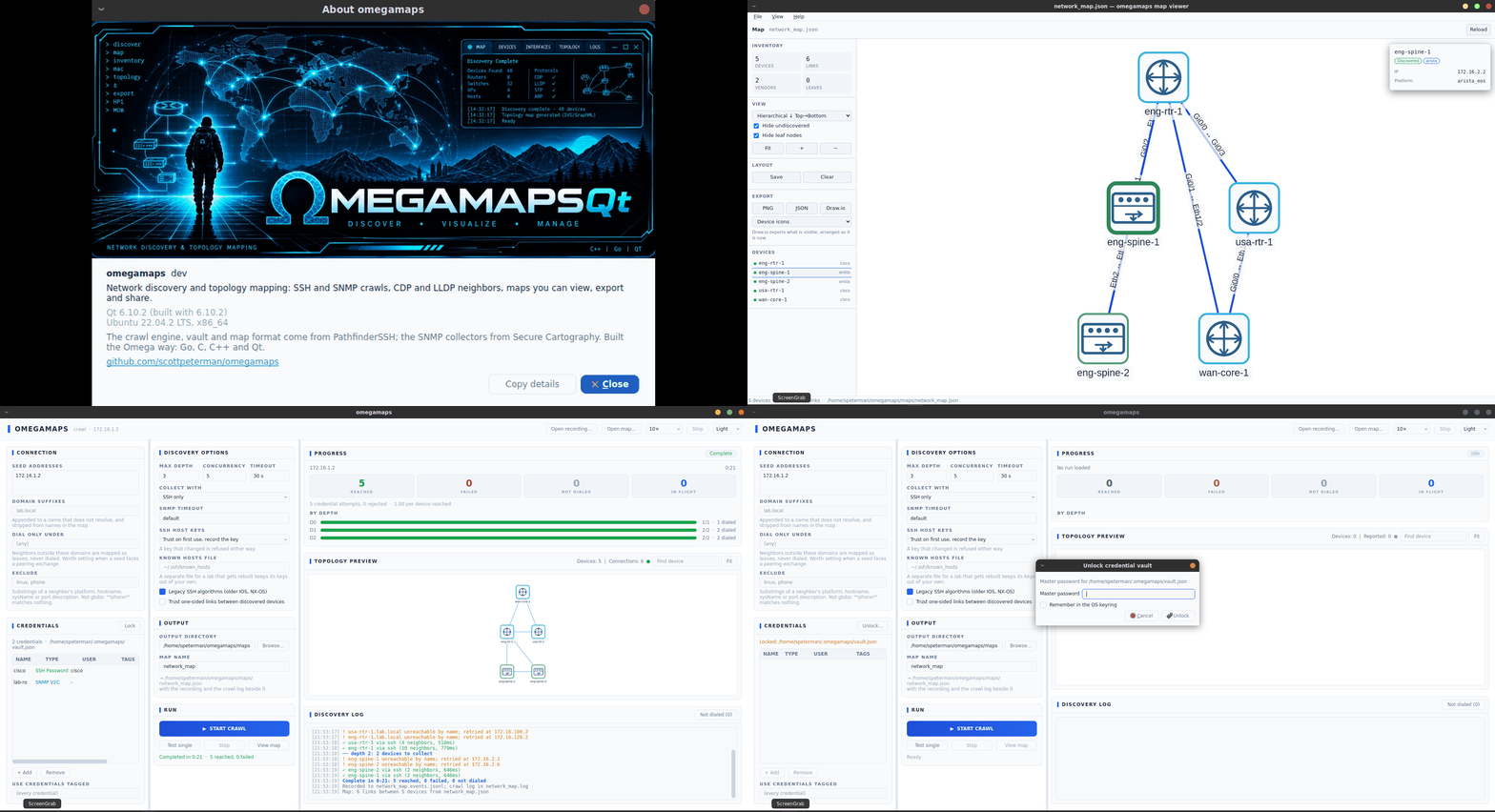
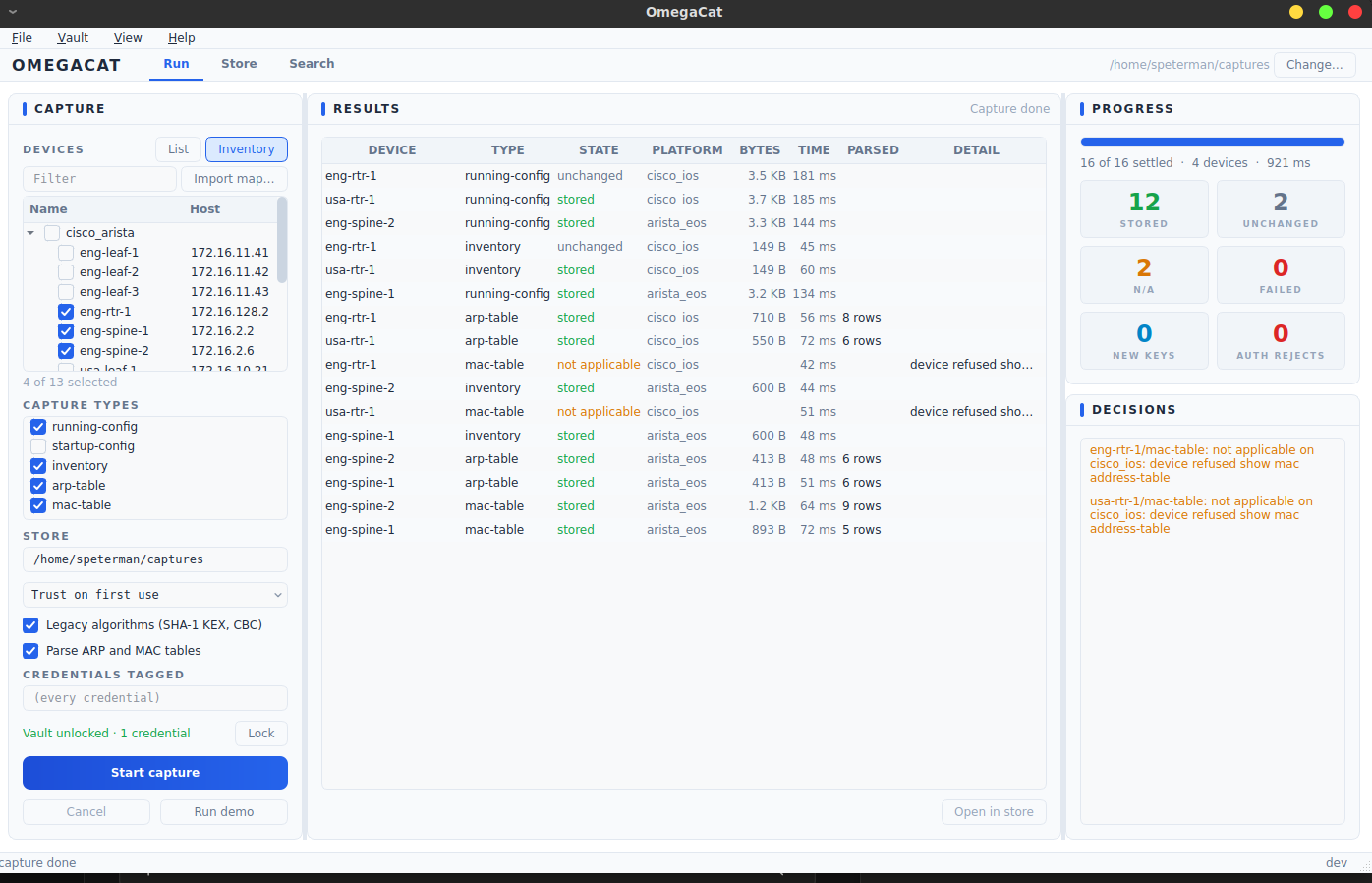
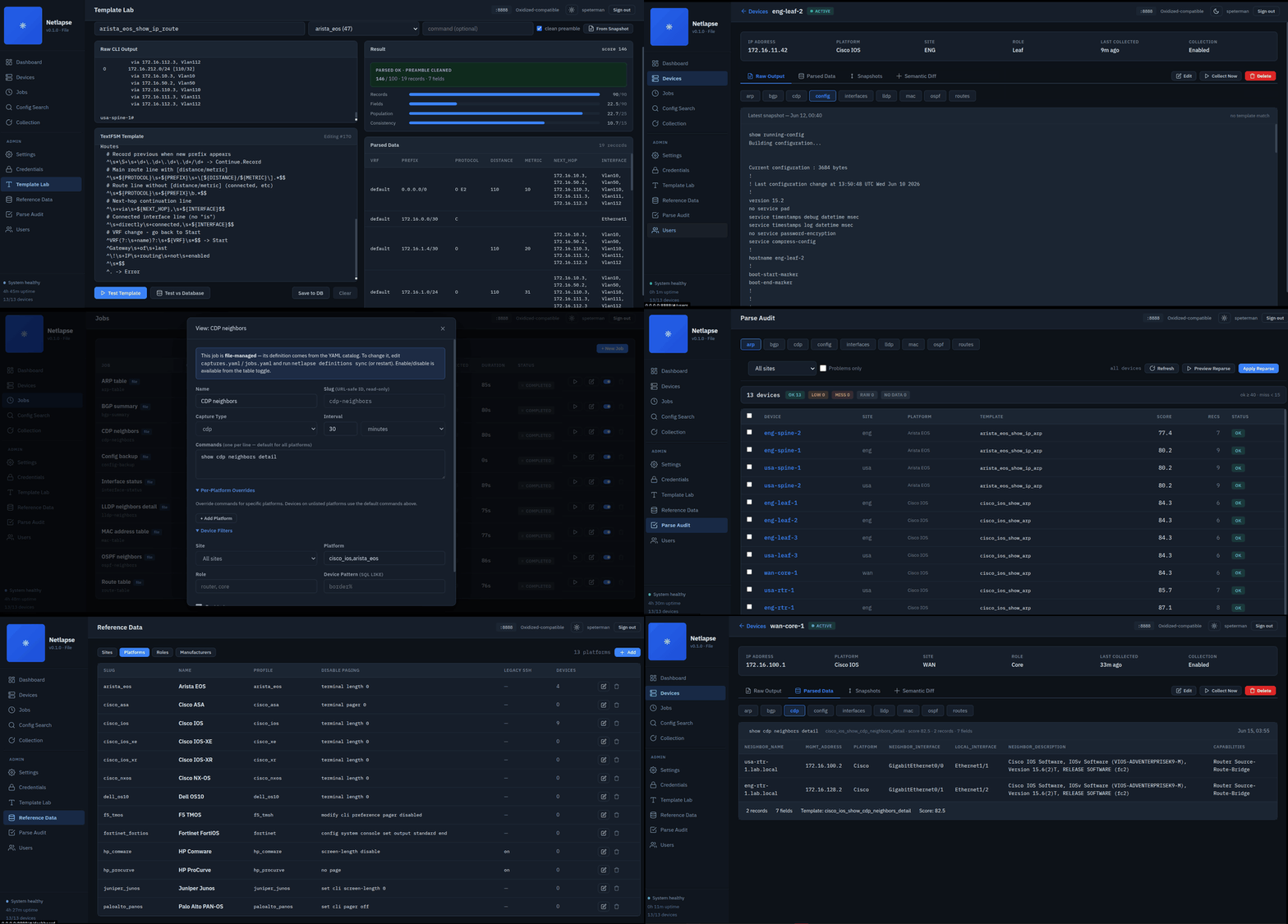
What makes it different — the parser picks the template: tfsm-fire scores a 1,276-template library spanning 15+ vendor families against the actual shape of each capture and auto-selects the best match, so there's no per-command template mapping to maintain. One Search takes a single token — IP, MAC, ASN, hostname, serial — and returns every reference across the fleet, octet-anchored and vendor-format-aware, grouped by what it means. Self-seeding from a Secure Cartography map; no NetBox required.

What makes it different —
fibtrace.diff: load a pre-change JSON, load a post-change JSON, see quantified impairment metrics — paths, edges, ECMP width, churn — with a CRITICAL / WARN / OK triage band at the top. Hover any listed path and it renders on both graphs simultaneously — you're not mentally diffing two pictures, the tool is doing it for you. Export JSON for programmatic use, SVG/PNG for MOP artifacts and IR write-ups. Change validation you can hand to a reviewer.

What makes it different: the Linux collector probes the host on first connect and only runs collectors whose capability gates are satisfied — same HUD renders different panels for a Cumulus switch, an Ubuntu server, an Alpine container, or a Proxmox hypervisor. Any system that can produce a URL (Grafana, NetBox, PagerDuty, Slack) can deep-link into a live session.

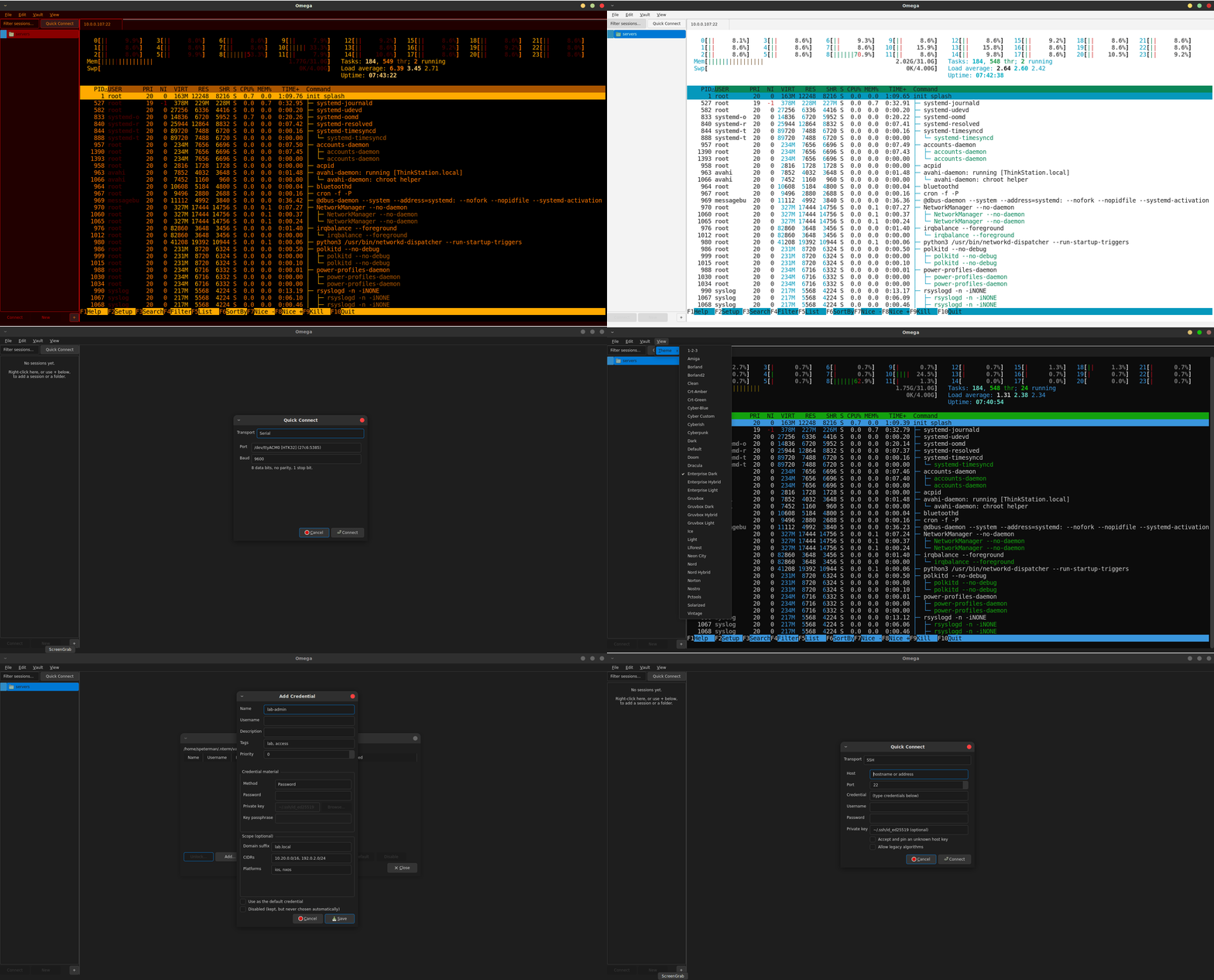
TerminalBackend, so scrollback, selection, theming, and logging are identical across all three. Auto-reconnect on input preserves the tab and its scrollback; an anti-idle keystroke defeats device-side exec-timeout that TCP keepalives don't reset. A data-driven theme registry loads YAML themes from a directory at startup — a 30-theme pack (Dracula, Nord, Gruvbox, Tokyo Night, CRT) ships in the repo, each carrying its own 16-color ANSI palette. The author's daily driver.


Datacenter and peering infrastructure on Arista and Juniper. Circuit turn-ups, PNI implementations.
BGP peer migrations — pre-flight validation, state auditing, cutover execution.
Enterprise network: 600+ retail locations, DCs, corporate sites across Cisco, Aruba, Palo Alto.
Device state collection platform (Flask/FastAPI, MySQL) for auditing and compliance.
Built network test automation from the ground up in Robot Framework and pyATS — Python test suites running against real Arista and Cisco datacenter hardware, triggered from GitLab CI on every config and image change.
VxLAN/EVPN fabric validation, leaf-spine topology verification, control-plane and data-plane convergence testing.
IP Services architecture across a tier-1 backbone — MPLS L3VPN, VPLS, IPVPN, Converged VOIP/Data, Managed Internet.
Anycast DNS, syslog infrastructure, Netflow collection and analysis at carrier scale.
Mobile carrier network architecture. MPLS core with OSPF-TE, VPLS, MVNO peering. Datacenter design — largest fabric ~300 switches.